
A Healthier Jamaica: The Future of Mental Health and Well-being.

Traveller.

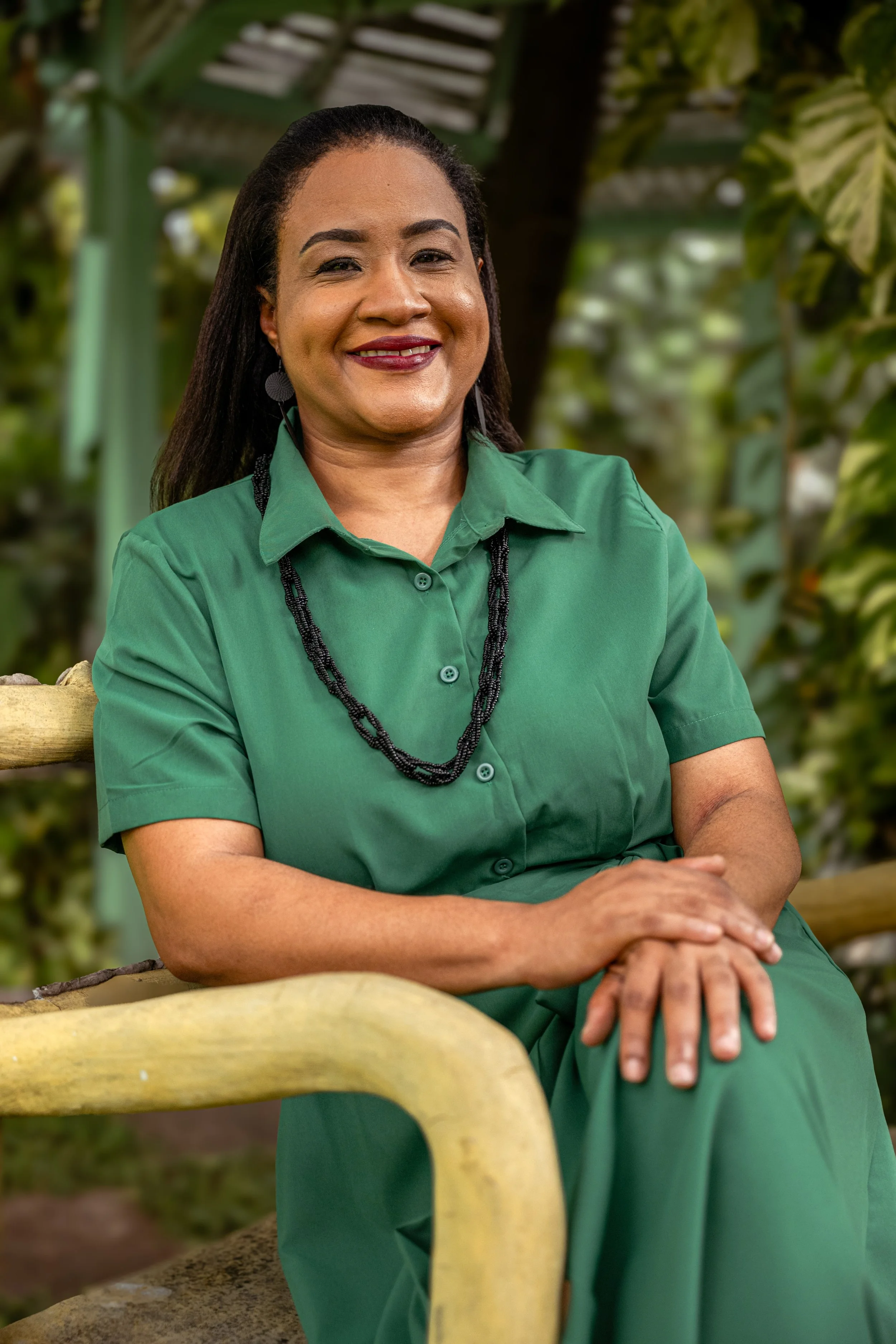
Jhanille A. Brooks, Psychologist, Advocate, Speaker, Author.
A Healthier Jamaica: The Future of Mental Health and Well-being.
“My therapist says I need to work on my boundaries.”
“I can’t wait to talk to my counsellor about this.”
“Can anyone recommend an affordable therapist in Kingston who is queer-friendly?”
These are the types of conversations I hear now, both on and offline, among the younger generation. The taboo around engaging in mental health care is slowly stripping away. The hushed whispers of “Yuh hear Ms. Mazie son get off him head, yeah man him chip lick.” are much quieter these days and, hopefully, sooner rather than later, will disappear entirely.
This is the state of mental health in Jamaica. We are at a delicate turning point that must be handled with continued care and dedication to get us to a place where everyone, older and younger, from Morant Bay to Negril, can access quality mental health treatment without having to break the bank.
In a way, the pandemic moved the needle. As difficult as it was, it revealed many elements of Jamaican life that needed urgent attention, including our mental health care system and our own personal mental well-being. It was as if there was a collective recognition of, “So that’s what they were talking about all these years.”
I, along with the Jamaica Mental Health Advocacy Network (JAMHAN), the Ministry of Health and Wellness, and mental health practitioners and advocates across the island, had been preaching the importance of good mental health for years, only to be met with responses such as, “Dat naav nuttn to do wid me. Afta mi nuh mad!”
And so, here we are a few years later. What does the future of mental health look like, and what is needed to ensure that it is bright?
Firstly, advocacy must remain a priority, with a focus on strengthening the system, expanding access and increasing investment in mental health resources.
Increasing access isn’t solely the responsibility of the public health system. Employers should find ways to provide these services for staff, and insurance companies should include mental health care in all their offerings.
In addition, business owners, managers, teachers, pastors, police officers, bartenders, hotel and hospitality staff, security guards, taxi drivers, hairdressers and barbers, coaches, community leaders, youth workers and others who influence the people in their care should be trained in Psychological First Aid to identify signs of distress, respond appropriately, and make referrals when necessary.
It is also time to pay closer attention to the sometimes-overlooked areas of mental health, such as substance misuse. I’m sure the National Council on Drug Abuse (NCDA) would welcome greater support as it seeks to shift cultural norms away from the acceptance of the “community drunk” who drinks a “special” (rum and Boom) for breakfast, alongside the emergence of many young people joining the “molly team”.
And let us not forget our ageing population. Dementia is an increasing public and mental health concern in Jamaica, with research estimating its prevalence among older Jamaicans at approximately 6%. Conditions such as Alzheimer’s disease are often mistakenly viewed as a normal part of ageing, placing significant psychological and emotional strain on individuals and their families.
These are just a few opportunities for continued growth and progress. With the right level of prioritisation, investment and stakeholder engagement, the future of mental health in Jamaica can be bright.
But until then, what can we all do to steer the ship in that direction?
What does my role look like as a friend, parent, partner, colleague, neighbour, church member, teacher, manager or community member?
We must be our brothers’ and sisters’ keepers, fostering and maintaining communities.
COVID taught us the importance of coming together and the need for mental health support to reach people where they are. Hurricane Melissa reminded us of that too.
Be the person who can provide a shoulder to lean on and a listening ear without sharing someone’s story on a gossip blog. Check in on family members and friends you haven’t heard from recently. Notice when a colleague appears withdrawn, or their performance begins to decline.
Employers must build humane workplaces that prevent burnout. Media houses and public figures must speak responsibly, avoiding language that perpetuates stigma.
Music, sport, church life, storytelling, mutual aid and community leadership have always helped Jamaicans survive hard times. They can also help us heal.
We must learn to ask better questions: not “What is wrong with you?” but “What has happened, and how can I help?”
We must check in, listen and encourage professional support when needed.
The future of mental health in Jamaica will not be built by experts alone. It will be built in clinics, classrooms, churches, boardrooms, barbershops, WhatsApp groups, family yards and community centres.
It will be built each time someone chooses empathy over ridicule, help over denial and care over judgement.
A healthier nation is possible when mental wellness becomes part of how we define prosperity, safety and freedom.
Jamaica’s opportunity now is to become a country where people are not only encouraged to survive but also supported to live with dignity, connection, purpose, and hope.
Jhanille A. Brooks, Psychologist, Advocate, Speaker, Author.
……
Jhanille A. Brooks’s article forms part of our August Guest Editor series, Voices Shaping Jamaica’s Future, where leading visionaries share ideas to inspire conversation, innovation and opportunity for Jamaica’s next generation.
We are in a knowledge-sharing evolution, creating a new world.
Time, to create our new futures.
Free Jamaica and free the world.
Best wishes,
Sherry-Ann Collins, I am her.
Jamaican Freedom Fighter, for the people.
Fighting for the creative freedom of the Jamaican peopledem and Pitch Futures, our future creative talent.
I am human. I create from my own visions and ideas, reading culture and the world.™
Powered by Dad’s Life Medicine, the product.
Listen on Pitch Conversations.
The birth of a Freedom Fighter.
Pitch Futures CIC. Inspire our future creative talent.
I am a confident Black woman, time traveller.
I will die happy knowing that our people are free.
